
A reflection on May Crowning
May Crowning is not really about elevating Mary above others. It is about recognizing what God can do through a human life fully opened to grace.
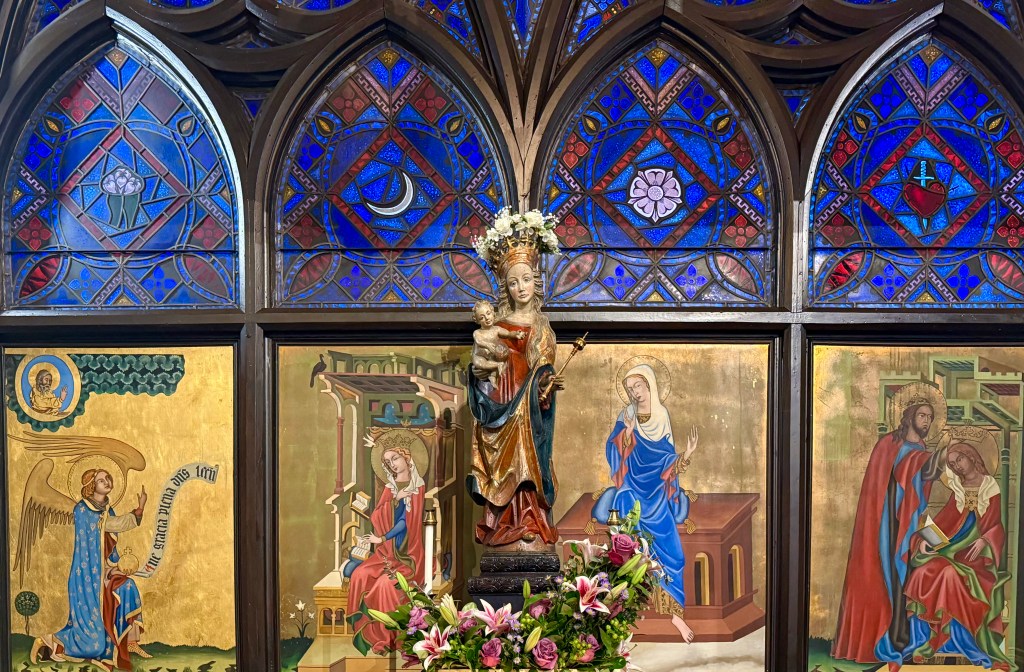
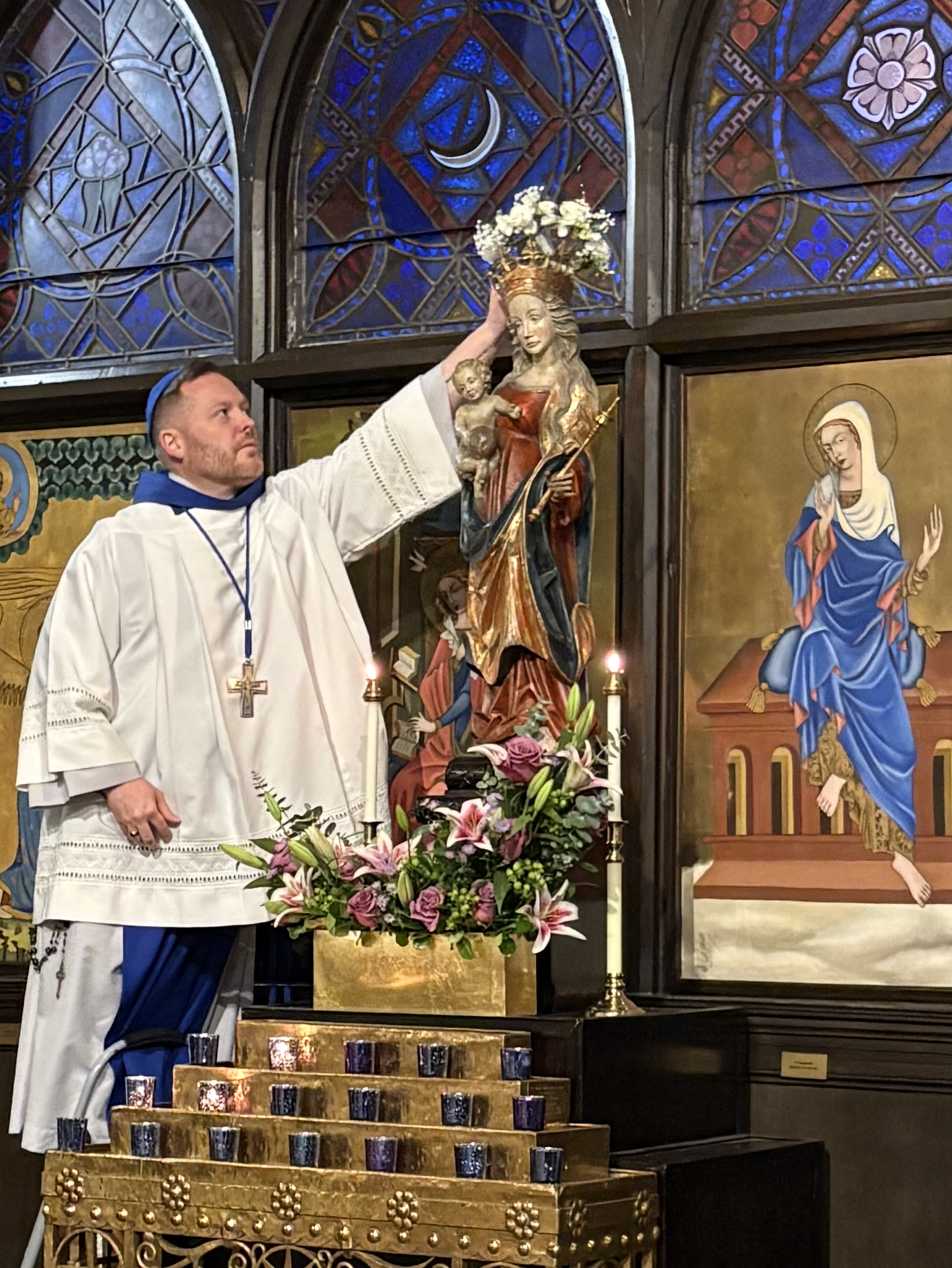
Today, on a beautiful spring day in Chicago, I had the pleasure of participating in a simple and beautiful act on behalf of my own religious community. Flowers were arranged. The Regina Ceali was sung. A crown—woven from spring blossoms—was placed upon the statue of Mary at The Church of the Atonement, where our community was founded. The ritual is called May Crowning, and is performed in similar fashion at churches around the world in springtime. At first glance it can seem quaint, perhaps even overly sentimental to modern Episcopalians shaped by restraint, intellect, and careful liturgy.
And yet, beneath the flowers and ceremony lies something profoundly human and deeply theological.
May Crowning is not really about elevating Mary above others. It is about recognizing what God can do through a human life fully opened to grace.
When we crown Mary, we are not crowning power. We are crowning humility. We are honoring courage. We are lifting up the quiet “yes” of a young woman who agreed to bear Christ into a fearful world. In a culture that often rewards domination, visibility, and self-promotion, Mary stands as a different kind of witness: receptive rather than controlling, contemplative rather than performative, steadfast rather than loud.
For Episcopalians, this matters.
Our tradition has often tried to hold together word and sacrament, intellect and mystery, Protestant reform and catholic devotion. Mary sits gently in that tension. We do not generally approach her with the same devotional intensity found in some other Christian traditions, yet neither do we discard her. Instead, she remains what the prayer book and Anglican tradition have often allowed her to be: a model disciple, Theotokos—the God-bearer—and a sign of what holiness looks like in ordinary human flesh.
May Crowning gives us a physical, embodied way to remember this.
There is also an important statement in the ephemeral nature of the flowers used. They are fleeting. They bloom gloriously and then fade. To crown Mary with flowers is to acknowledge both beauty and impermanence. The blossoms of spring remind us that resurrection itself comes through vulnerability. Nothing living stays untouched by time.
And perhaps that is one reason this devotion still speaks today.
We are living in an age of exhaustion. Many people carry anxiety about the future, grief about the world, and uncertainty about their place within it. Contemporary spirituality can sometimes become highly individualized—focused on self-improvement, productivity, or personal enlightenment. But May Crowning invites us into something slower and more communal. It asks us to pause long enough to honor holiness not in achievement, but in openness.
There are parallels to this in many faith traditions.
In Hindu traditions, garlands are often offered to sacred images or honored persons as signs of reverence, gratitude, and devotion. In Buddhism, flowers placed before statues of the Buddha symbolize both beauty and impermanence. In Indigenous traditions around the world, flowers, herbs, and sacred objects are offered as gestures of relationship with the holy and with creation itself.
These practices recognize something we modern people often forget: human beings need ritual. We need beauty. We need symbolic acts that engage the body as well as the mind. We need ways to express reverence that words alone cannot carry.
May Crowning speaks this language of embodied devotion.
And perhaps, too, it restores a healthier relationship with the feminine in Christian spirituality.
So when an Episcopal parish crowns Mary in May, the act can become more than nostalgia or inherited custom. It can become a proclamation about the kind of world we long for: a world where gentleness is not weakness, where contemplation matters, where the vulnerable are honored, and where God still enters human history through willing hearts.





Leave a Reply