

Uncertainty is not a failure of discernment. It is one of its essential teachers.
There is a moment in every season of discernment when the maps stop working.
We have prayed. We have made lists. We have sought wise counsel. We have imagined every possible future until our imagination itself becomes exhausted. Yet the answer remains elusive.
It is tempting to think we have failed.
But uncertainty is not a failure of discernment. It is one of its essential teachers.
We often approach discernment as though God were hiding the “correct” answer somewhere just beyond our reach. If only we prayed harder or listened better or found the right spiritual director, then certainty would finally arrive. But that picture of God seems strangely unlike the one revealed in Jesus.
Again and again, Scripture portrays a God who invites trust more than certainty.
Abraham leaves without knowing his destination. Ruth follows Naomi without guarantees. Mary says yes without understanding all that her yes will require. The disciples leave their nets without a detailed strategic plan for the next three years.
Faith has rarely meant possessing complete information. More often it has meant taking the next faithful step.
There is a quiet temptation during discernment to become suspicious of ourselves. We wonder if our desires are merely self-serving, if our hopes are illusions, if every movement of the heart is something to be questioned.
Certainly, self-deception is possible. Christian tradition has always recognized the need for humility, prayer, and community. But there is another danger that receives far less attention: becoming so distrustful of ourselves that we no longer believe God could be speaking within us at all.
If we believe that every desire is suspect, every joy misleading, every intuition dangerous, then discernment becomes impossible. We spend all our energy trying to silence the very soul through which God often whispers.
The Quaker writer Parker Palmer once observed that before we tell someone who they should become, we ought to ask, “Who are you?” Vocation is less about manufacturing a new self than uncovering the one God has been forming all along.
I have come to believe that discernment requires two forms of trust held together.
The first is trust in God.
Not trust that every outcome will unfold according to my plans, but trust that God’s love is deeper than my mistakes. If I take a step that later proves to be the wrong one, grace is not suddenly withdrawn. The Great Shepherd has never depended upon my flawless navigation. God is remarkably capable of finding wandering sheep.
The second is trust in the soul God has given me.
Not because I am always right. I am not.
But because I believe that beneath fear and ego and ambition there is something true that the Spirit has been persistently shaping my entire life. Thomas Merton called it the true self. The Quakers speak of the Inner Light. Scripture speaks of Christ dwelling within us.
Whatever language we use, Christian faith insists that God’s Spirit is not merely outside us issuing instructions. The Spirit is also within us, praying with sighs too deep for words, gently drawing us toward what is life-giving, beautiful, and true.
Discernment then, is learning to distinguish between the frightened voice of the false self and the quieter, steadier voice of the soul that is always being formed in Christ.
That voice is rarely dramatic.
It can often sounds like a persistent peace. A deepening compassion. An unexpected sense of liberation. A path that asks more love of us than fear.
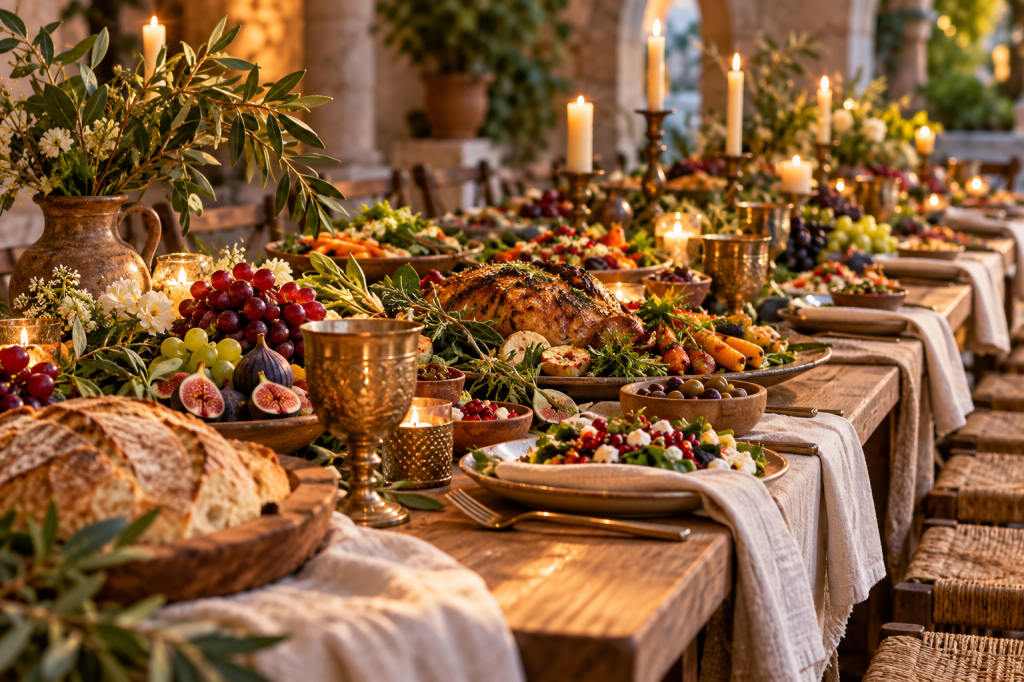
When I do not know what comes next, I return to image of the Wedding at Cana.
Mary does not control the miracle. She does not know how Jesus will respond. She simply trusts that love is already at work, even before she can see its shape. Then she tells the servants, “Do whatever he tells you.”
Perhaps that is enough for today.
Not to know the whole journey.
Not to force certainty where none has yet been given.
Simply to remain attentive. To trust the God who has carried us this far. To trust the soul that God is still forming within us. And when the next invitation comes—even if it is only one small step—to take it with courage.
The future has always belonged to God. Our calling has always been simply to walk toward it in faith.





Leave a Reply